
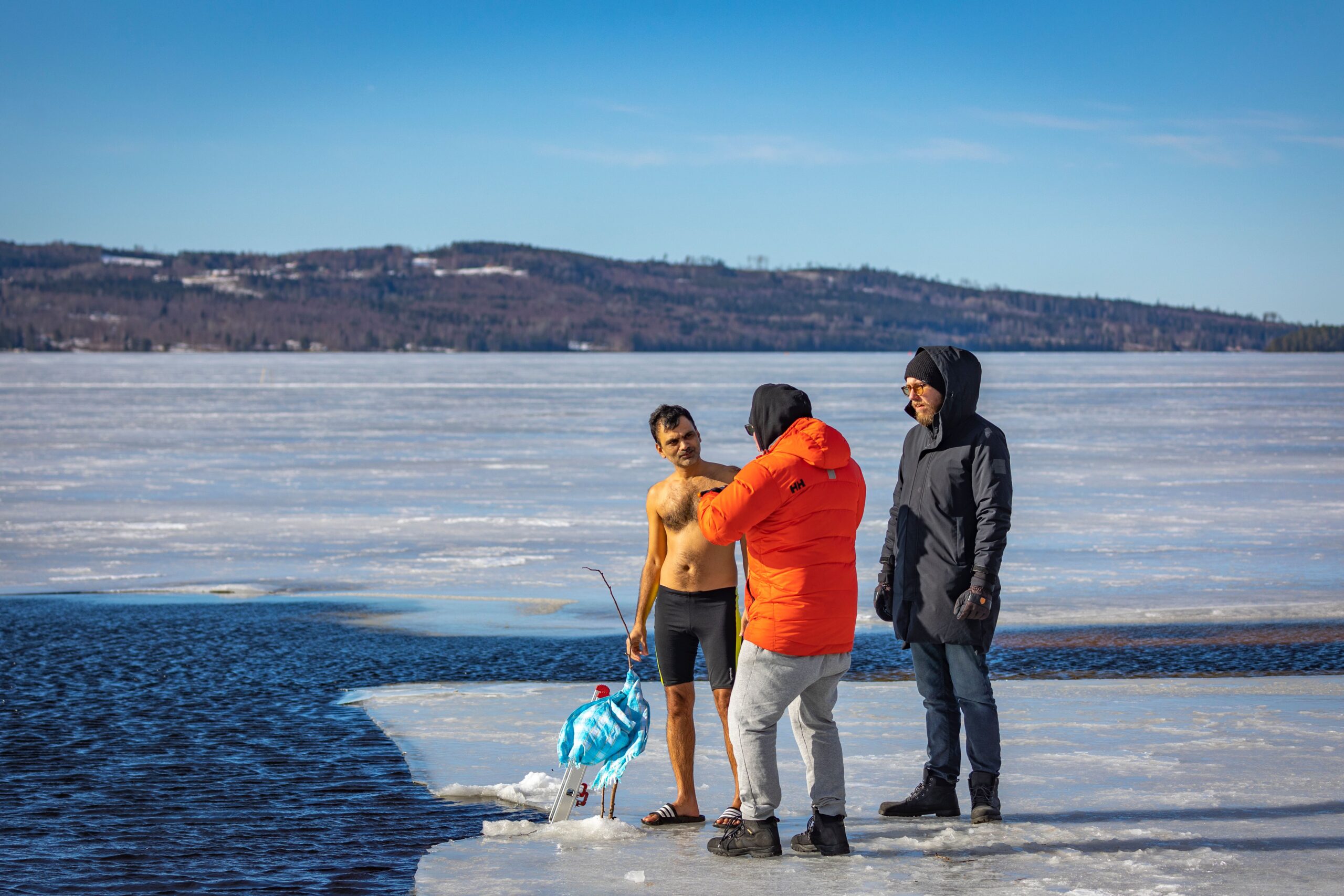
The Polar Bear Club is what most people used to think of when the idea of dipping into freezing cold water was discussed. Now this fringe activity has moved into a mainstream wellness trend, backed by a growing body of research. Interestingly, the practice goes back centuries. Hippocrates himself, the father of Western medicine, documented using cold temperatures for analgesic (pain relief) and medicinal purposes.
Whether delivered through ice, cold water, or cold air, the underlying mechanism is the same: cooling the body lowers core and tissue temperature and alters blood flow. This triggers downstream effects that include reduced pain perception and an improved sense of well-being. Water is a more efficient conductor of cold (and heat) than air, therefore dipping into cold water produces these effects much faster.
How Does it Work?
Cold exposure triggers what’s known as the cold shock response. Your blood vessels constrict, heart rate and breathing rate increase, and stress hormones are released. Within the first minute, norepinephrine levels can rise substantially. Some studies report increases of 200% or more, improving focus and alertness for hours afterwards.
Dopamine levels also increase with cold immersion, and research has found this elevation can persist for several hours afterward, in contrast to the shorter-lived spikes associated with food or caffeine. This sustained effect is one reason cold plunging is often described as improving mood throughout the day, not just immediately after.
Reported benefits of cold immersion therapy:
- Increased norepinephrine and dopamine following immersion
- Reduced muscle soreness and inflammation after exercise
- Improved mood, with some studies showing benefits for depressive symptoms
- Increased stress tolerance and cold acclimation over time
- Improved sleep quality reported by regular practitioners
- Temporary increase in metabolic rate during rewarming
Cold water immersion is also widely used for exercise recovery. The vasoconstriction that occurs during immersion, followed by vasodilation during rewarming, is thought to help reduce inflammation and muscle soreness after intense activity, which is why the practice has long been used by athletes even before it became a broader wellness trend.
Some studies report that cold plunging directly after weight training can reduce muscle hypertrophy, so it’s recommended to delay cold exposure at four to six hours after lifting weights, if gaining muscle mass is your goal.
Choosing a temperature
There’s no single “correct” temperature, but most practitioners work within a few general ranges depending on experience level and goals.
Beginner range
55–65°F
13–18°C
Standard range
45–55°F
7–13°C
Advanced range
38–45°F
3–7°C
Extreme / not recommended without supervision
Below 38°F
Below 3°C
Most people find that 50–59°F for two to five minutes provides a meaningful physiological response without excessive risk. Longer durations don’t necessarily increase the benefit and raise the risk of hypothermia, so duration matters less than consistency.
Cold tolerance can differ between men and women, and women seem to reap most benefits at the higher end of the temperature range, 57-59℉. These temperatures trigger the mild stress necessary, without overwhelming the system.
Practical tips for getting started
- Start with cold showers for 30–90 seconds before progressing to full immersion
- Consider neoprene or wool socks at first. Extremities lose heat fastest and are often the limiting factor
- Keep sessions short at first; 1–2 minutes is enough to begin building tolerance
- Breathe slowly and steadily to manage the initial shock response
- Avoid plunging immediately after alcohol consumption or while alone in open water
The body has an amazing ability to adapt. What feels overwhelmingly uncomfortable in the first week becomes routine within a few weeks of consistent practice.
Fun Fact:
Ever wonder how the “Polar Bear Club” started? We can thank Bernarr McFadden, who founded the Coney Island Polar Bear Club in 1903, based on his belief that icy water was great for stamina, virility and immunity. The club still meets to this day, and there are 1000’s of various reiterations of the organization around the world.
Medical Disclaimer: People with cardiovascular conditions, Raynaud’s syndrome, or blood pressure concerns should consult a physician before beginning, and anyone new to the practice should start gradually and never push through symptoms of dizziness, numbness, or chest discomfort. We also recommend that you avoid cold plunging alone until you are more experienced in the practice.