
Protein is getting a lot of press these days. Even cereals and candy bars are now packing in more protein and trying to cash in on the craze. And there are sound reasons for increasing protein intake (as long as it is done mostly with healthy whole foods). Instead of simply jumping on the bandwagon, we want to take a look at what protein does in the body, how much you really need, and what the studies say.
Protein and Everyday Health
Protein (and the amino acids it breaks down into) provides the raw material your body uses to repair tissue, run your immune system, carry oxygen, and create the enzymes and hormones that keep everything functioning. It isn’t necessarily more important than fats or carbohydrates, as those both play vital roles in a healthy body. But increasing protein can help us level up in a lot of ways.
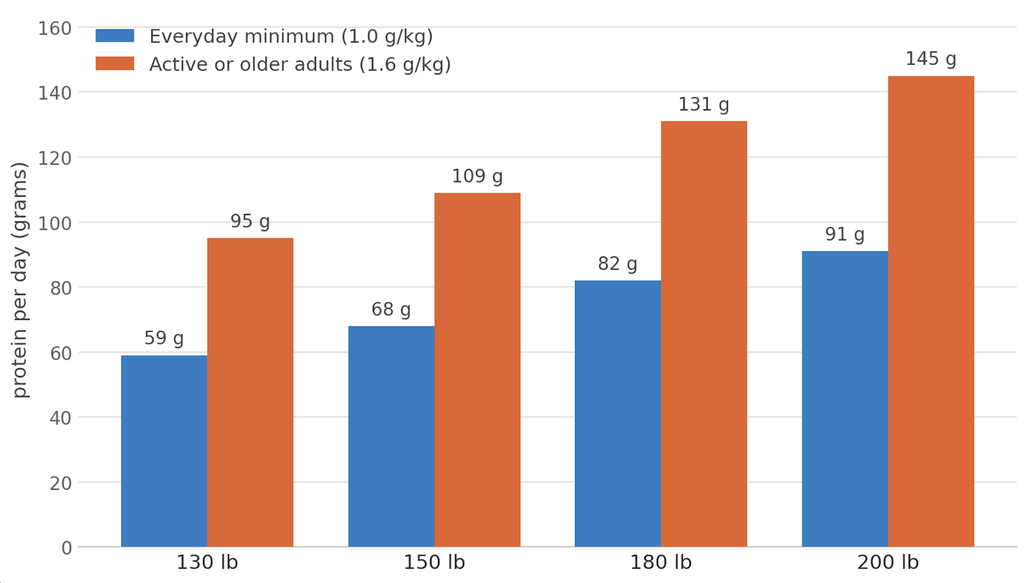
Your body is in a constant state of breakdown and rebuilding, and protein supplies the amino acids that make repair possible. When too little protein is coming from dietary sources, the body starts pulling from its own reserve, like muscle, which over time lowers strength and metabolism. Research suggests that most healthy adults do better somewhere in the range of 0.5 to to 0.8 grams per pound of body weight (about 60-100 grams of protein per day for a 130 lb person), with active people and older adults benefiting most from the higher end of that spectrum.
Protein and Weight Loss
Protein is the macronutrient most strongly tied to feeling full. It blunts hunger hormones and triggers a stronger sense of satiety than either carbohydrates or fat, which makes it easier to eat less without feeling deprived. It also takes more energy to digest, so a portion of the calories in protein is burned simply processing it. Just as importantly, eating enough protein while losing weight helps protect lean muscle, so more of what you lose comes from fat rather than the tissue that keeps your metabolism humming. This combination of appetite control, higher energy expenditure, and muscle preservation is why higher-protein diets consistently outperform standard ones for body composition.
Timing Matters
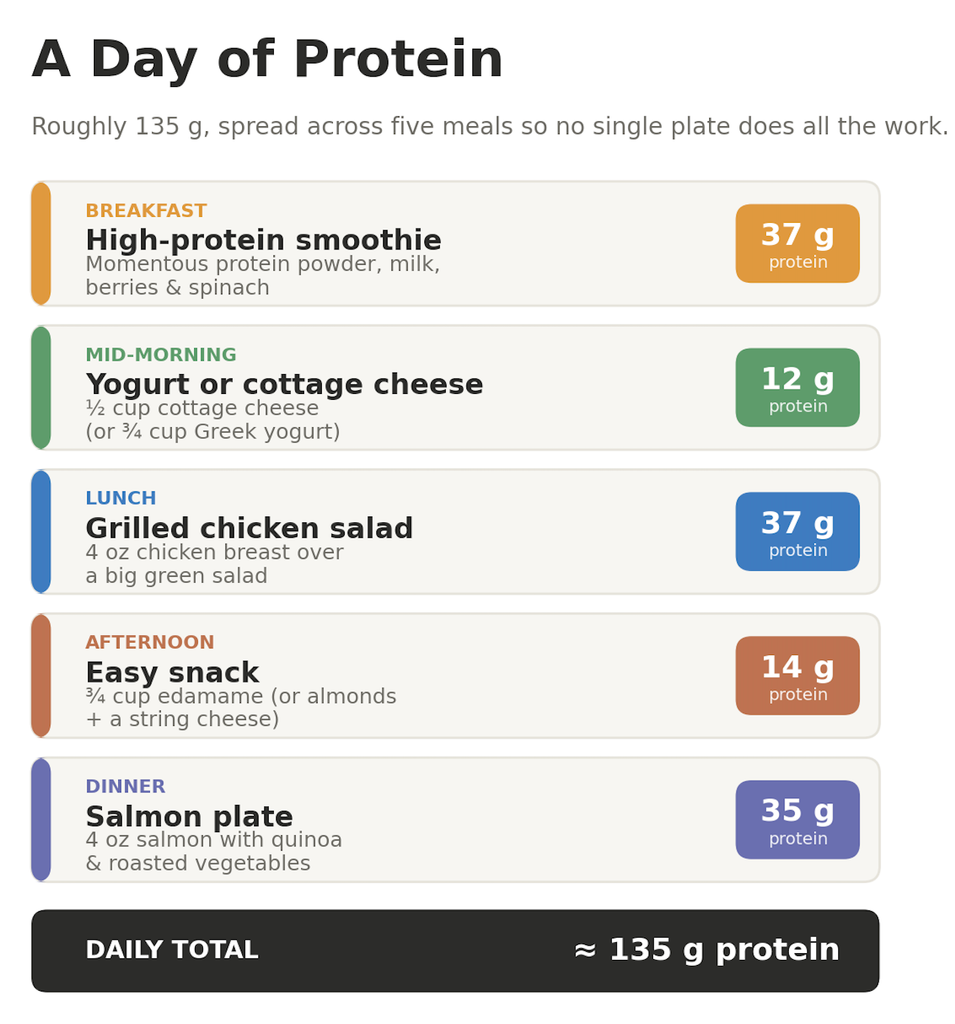
When you eat matters almost just as much as what you eat, according to recent research. Front-loading your protein earlier in the day helps prevent post-meal glucose spikes, and evens out insulin response throughout the rest of the day. The same logic applies within a single meal: eating your protein and fibrous vegetables first, before the starchy or sugary parts, blunts the rise in blood sugar that follows.
In everyday terms, that means steadier energy and fewer crashes that leave you reaching for a snack an hour later. Keeping blood sugar on an even keel also makes it easier for your body to tap into stored fat rather than constantly storing it, so a protein-forward breakfast and lunch works in your favor for both health and fat loss.
Do Women and Men Need Different Amounts?
Men generally carry more muscle and have larger frames, so their absolute daily protein needs tend to be higher in grams. Women, on the other hand, start with less muscle mass on average, which makes protecting what they have important, especially through hormonal transitions.
As estrogen declines in perimenopause and menopause, women lose muscle and bone density more rapidly, and body fat tends to redistribute. Estrogen also plays a protective role in maintaining muscle, so its absence leaves women more vulnerable to both sarcopenia (muscle loss) and osteoporosis, striking far more women than men. For women in and after this stage, nudging protein toward 1.0 to 1.2 grams per pound of body weight, paired with resistance training and adequate calcium, magnesium and vitamin D3/K2, is an effective strategy for preserving strength and bone.
How Needs Shift With Age
Regardless of gender, starting around the fourth decade of life, we all begin losing muscle, and the pace accelerates after 60. Part of the reason is “anabolic resistance”, with older muscle responding less efficiently to protein. It takes more to achieve the same muscle-building effect a younger body would get from less. In addition to this, older adults often eat less protein overall.
This is why expert panels now recommend that healthy adults over 65 aim for 1.0 to 1.2 grams per pound per day, noticeably more than the general adult guidelines, and even more for those who are ill or highly active. After the age of 40, protein intake should gradually increase and then remain at these levels for optimum health and energy.
Combining a high protein diet with regular movement, especially resistance exercise, multiplies the benefit. Maintaining muscle into later life is closely tied to staying mobile, independent, and out of the hospital.
Best Sources of Protein
Not all protein is created equal, and the best sources are the least processed. Fresh, whole foods deliver protein alongside the vitamins, minerals, and fiber your body needs. A powder or a packaged bar can’t fully replicate this effect, with the exception of some highly nutritious protein powders. Look for ones that are transparent about ingredients, with no fillers. When it comes to protein powder, third-party testing matters, it’s how you know what’s on the label is actually in the tub. That’s why we recommend Momentous, and Argentis clients get 15% off as a perk.
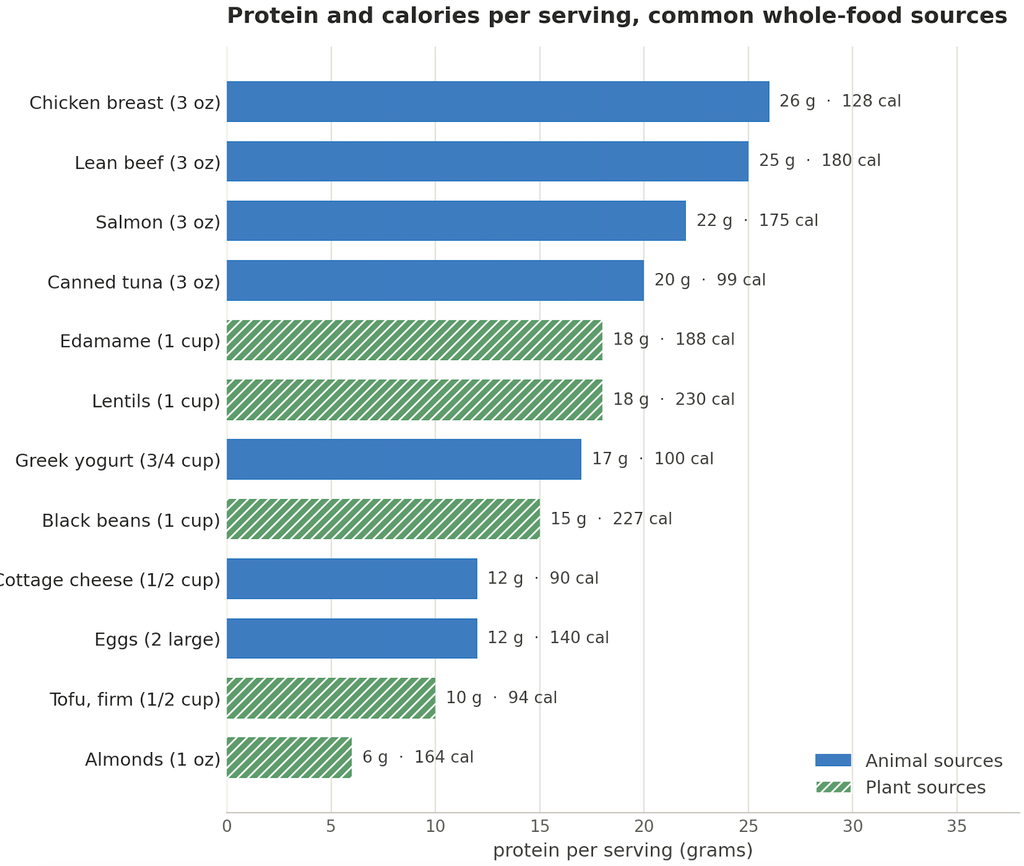
Eggs, fish, poultry, and lean meat are excellent protein sources, and vegetarians/vegans can also get ample protein from beans, lentils, tofu, nuts, and seeds. Ideally a diet that draws on both gives you range as well as quality. Eating this way takes a little planning. Prepping a batch of protein sources once a week can help simplify this task. Or adding a meal service like Honest Plate, with kitchens in Park City, Utah and the Hamptons, can take the work off your hands and do the meal prep for you.
The Takeaway
Protein keeps your whole body running, helps you feel full so weight loss is easier, and protects the strength and bone you want to hang onto as you get older. Build your meals around fresh, whole sources of protein, spread them through the day, and keep moving. Eating more protein isn’t complicated, but it does take consistency, which is the part that trips up busy people. If your days don’t leave much room for prepping real food, leaning on a little help to keep good protein within reach is a perfectly reasonable shortcut.
Supporting Research
Halton, T.L., & Hu, F.B. (2004). The effects of high protein diets on thermogenesis, satiety and weight loss: a critical review. Journal of the American College of Nutrition, 23(5), 373–385.
Moon, J., & Koh, G. (2020). Clinical evidence and mechanisms of high-protein diet–induced weight loss. Journal of Obesity & Metabolic Syndrome, 29(3), 166–173.
Dorling, J.L., et al. (2022). Does a higher protein diet promote satiety and weight loss independent of carbohydrate content? An 8-week low-energy diet intervention in women with obesity. Nutrients, 14(4), 851.
Bauer, J., et al. (2013). Evidence-based recommendations for optimal dietary protein intake in older people: a position paper from the PROT-AGE Study Group. Journal of the American Medical Directors Association, 14(8), 542–559.
Cruz-Jentoft, A.J., et al. (2019). Sarcopenia: revised European consensus on definition and diagnosis. Age and Ageing, 48(1), 16–31.
Smith, G.I., et al. — and related work summarized in: Moore, J., et al. (2024). The impact of protein in post-menopausal women on muscle mass and strength: a narrative review. Endocrines, 4(3), 16.
Mangano, K.M., et al. (2017 / reported analysis). Adequate dietary protein is associated with better physical performance among post-menopausal women aged 60–90. Journal of Nutrition, Health & Aging.
De Carlo, C., et al. (2018). Muscle and bone health in postmenopausal women: role of protein and vitamin D supplementation combined with exercise training. Nutrients, 10(8), 1103.
Yang, M., et al. (2024). Association of protein intake with sarcopenia and related indicators among older adults: a systematic review and meta-analysis. Nutrients, 16(24), 4350.
Park Y-M, Heden TD, Liu Y, Nyhoff LM, Thyfault JP, Leidy HJ, Kanaley JA. A high-protein breakfast induces greater insulin and glucose-dependent insulinotropic peptide responses to a subsequent lunch meal in individuals with type 2 diabetes. J Nutr. 2015;145(3):452–458.
Medical Disclaimer: Protein needs vary with individual health status. People with kidney disease, in particular, should consult a clinician before increasing protein intake, as recommendations differ for them.